Pages

Showing posts with label Clamp. Show all posts

Tuesday, 19 June 2018

What we made in Tech (Candle Holder)

We've made candle holders in tech, it's not too hard to do it only needed three pieces and some few types of equipment.

Equipment

-Wood
-Glue
-Drill
-Sand Paper
-File
-Plane
-Clamp
-Saw
-Oil
-Water Based Gloss
-Ruler
-Square
-Heat Gun

Outcome

Image result for small candle holder wood

Wednesday, 11 April 2018

Investigating State Changes (Matter)

Aim

To observe waster as it changes state from solid to liquid and then to a gas.

Equipment

-A 250 mL beaker.
-Thermometer.
-Bunsen burner.
-Heatproof mat.
-Tripod.
-Gauze mat.
-Stopwatch.
-Retort Stand.
-Clamp.
-Ice cube.

Method

-Collect enough ice so that your beaker is half full and place the thermometer into it while you set up the rest of the equipment.

-Set up the retort stand and clamp alongside the tripod and gauze mat.

-Place the beaker of ice on the gauze mat and gently clamp the thermometer so that it is held upright and the scale is easy to see. The bottom of your thermometer should be low enough to still be covered by water when the ice melts, but not touching the bottom of the beaker.

-Record the initial temperature of the ice in the data table.

-Light the Bunsen burner and start timing with the stopwatch.

-Measure and record the temperature every minute.

-Continue measuring and recording the temperature until the water has been boiling for 2-3 minutes.

Results


Time (min)
Temp (°C)
0
0°
1
6°
2
19°
3
29°


Discussion

Using the word particles and energy explain why the ice melts.

When the heat is added, the particles vibrate so much that they break away. When more of the heat is added the heat's energy it slowly melts the ice away.`

Monday, 26 March 2018

Bouncy Balls

Aim

The purpose of my investigation is to find out how high a ball can bounce at a certain height.

Equipment

-Golf ball
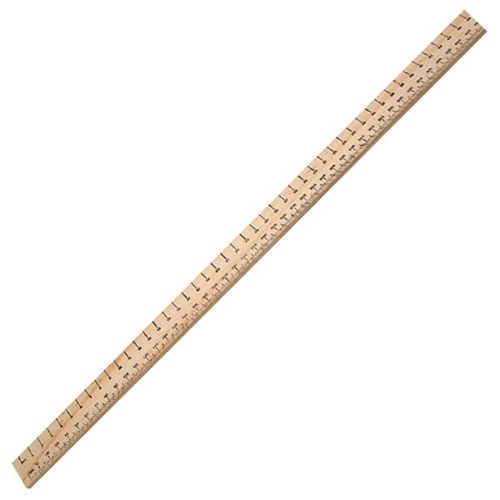
-1m Ruler
-Clamp
-Devices (That is able to record)

Hypothesis

The higher the ball drop the higher bounce but not higher from where you drop the ball.

Method

-Get the equipment needed (ball, ruler, stand with boss head, papers to put your data on and camera)
-Try out my investigation 3 times at 5 certain height while my camera is recording in slow motion.
-Records my data.
-Put in a graph 
Finish off experiment by blogging it

Key Variables

The Dependent Variable -The height of the ball bounces

The Independent Variable -The height of the ball

Control Variables-Surface of where you drop the ball
                            -The type of ball you use


Drop Height
Height
Of
First
Bounce

Trial 1
Trial 2
Trial 3
Average

0.2 (m)9 (cm)14 (cm)13.5 (cm)14 (cm)
0.4 (m)27 (cm)27 (cm)27 (cm)27 (cm)
0.6 (m)34 (cm)33 (cm)32 (cm)34 (cm)
0.8 (m)43 (cm)44 (cm)40 (cm)44 (cm)
1 (m)s52.5 (cm)50 (cm)51 (cm)52.5 (cm)

Conclusion

My hypothesis was correct  "The higher the ball drop the higher bounce but not higher from where you drop the ball.''