Pages

Showing posts with label Science. Show all posts

Wednesday, 16 October 2019

Volcano Project

Pick a well-known volcano in the world. where is it, what is its name, is it extinct, dormant or active?

Mount Mayon - Philippines - Active

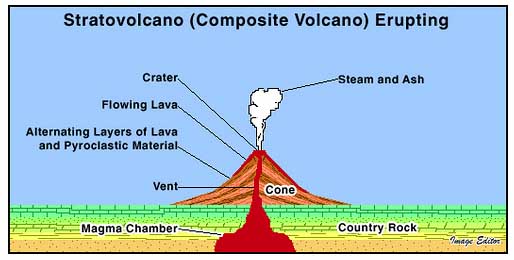
What type of volcano is it? How are these types formed, include a diagram of what they look like?

Strato Volcano. Stratovolcanoes formed through explosive eruptions depositing materials near a central vent.
 Image result for What type of volcano is mount mayon volcanoImage result for stratovolcano diagram

What are the types of rock formation around this volcano?

Igneous Rocks is formed around there like the rhyolite rock.
 Image result for rhyolite

Plan your model. What are you going to make it out of, how will you make it erupt, what landscape will you paint it? 

We will put a bottle in the middle and wrap it in flour and use water to harden it. We will shape it like a stratovolcano. We will make it erupt using elephant's toothpaste. We will need hydrogen peroxide and potassium permanganate and also dish soap.

Build it! Record it erupting and share.


Wednesday, 11 September 2019

Egg Drop

I made my design by using cardboard, newspaper and a type of foam. I made a box using cardboards to keep things together. I also used the newspaper and a type of foam to cushion the egg from inside.
I also used plastic to make a parachute but it didn't work properly so I took it out.

Tuesday, 6 August 2019

How a compass work


Image result for how does a compass work

The design of the compass allows the magnet to respond easily to Earth's magnetic field. Earth itself is a giant magnet that has its own magnet. So the north end of the compass will align to the Earth north pole.

Tuesday, 2 July 2019

Metallurgy - How To Prevent a Metal From Rusting

Whenever metal, oxygen and water you get the metal to rust. That's why your paint the metal to keep it from rusting. Metal rusting is because ion reacts with oxygen which causes oxide/iron oxide which is rusting.
There are other ways to prevent metal from rusting like coating it in oil or putting it in an airtight container.
So keep your tools that have metal dry and anything that has metal dry to keep it from rusting.
Image result for how to prevent metal from rusting

Wednesday, 7 November 2018

What Happens To Food

Ingestion - It is when a food enters your body via the mouth

Teeth Type - Molar is usually found at the back-side of your mouth. They are flat surface teeth and there are lots of them. Molars are usually found in the mouth of herbivores because they mostly eat grass which needs to be crush and grinded. 

                   - Incisor is a tooth that is found on the front of the mouth they look like chisels and functions like one, it cuts grass, and it is mostly found in herbivores.

                   - Canines are found on carnivores they are used for ripping the meat out of animals or holding them down so the predators can disable them one, for example, is a tiger. It is a pointed tooth between the incisor and the molar and can be found in humans. It is also called the eye teeth.

Digestion - It is when food 

Oesophagus - After the food is chewed it is turned into a bolus, a Latin word for ball, it is swallowed and go through the oesophagus and by the move called peristalsis a wave-like motion moves the food down the oesophagus to the stomach. 

Stomach - After the ball of food went through your oesophagus it moves down the stomach it is a large plastic bag that can enlarge that can hold up litres of food. There is an acid in your stomach called Hydrochoric acid. It is really dangerous and a really low pH level, 1-2, the reason for the acid there is to dissolve food and kills germs that enter the body because of food.

Small Intestine - The small intestine is located between the stomach and the large intestine. The pH level in the intestine is usually between 7-9, neutral with a slight of alkaline, this is the part of your digestive system where the absorption of nutrients takes place. All the proteins, carbohydrates and lipids have been broken down into small soluble molecules and can be absorbed into the bloodstream.

Muscular walls of the intestines - The muscular walls of the small intestines helps food move along via peristalsis the action of waving like motion.

Villi and microvilli and thin walls of a villus- A villus is a finger-like projection in the inner wall of the small intestines and a microvillus covers the surface of the villi. These can increase the rate of absorption. The thin walls of a villus help ensure the rapid absorption into the bloodstream.


Thursday, 23 August 2018

Human Digestive System


Mouth


-The mouth is where we ingest food
-We chew food with our teeth
-Canine teeth stab and rip food
-Incisors cut out food
-Our molar masticate (grind) the food
-The Salivary glands release saliva into out mouth and keep it moist
-The saliva breaks down the sugar in our food and lubricates it

Oesophagus

-It's a conduit for food and waters

Stomach

-Stomach acid kills the bacteria that entered your body 
-The Stomach breaks down the food into a paste

Duodenum

-This part of the digestive system receives chyme which is acid.

Pancreas

-Converts food into energy
-The pancreas also add more chemicals to the duodenum to break more bacteria

Gall Bladder

-To store bile 

Small intesitine

-It absorb and digest food (Nutrients, Mineral)

Liver

-It produces protein
-It also is one of the organ that break down old or damage blood cell

Appendix

-Storehouse for good bacteria

Large Intestine

-Absorbs water and useless material from the body

Rectum

-Temporary storehouse for feces

Anus

-A hole your feces comes out of

Why do you have a mouth?Image result for mouth

-To chew food.

Thursday, 9 August 2018

Food Testing

Testing for Simple Sugar

Aim

To test a sample of food to determine whether it contains simple sugars.

Equipment

-Bunsen Burner
-Test Tube
-Test Tube Tongs
-Benedict's Solution
-A sample of food
-Safety glasses

Method

-Place about 2 ml of the sample into a test tube and then add 5 drops of Benedict Solution.
-Heat with a Bunsen Burner until it changes colour. Do not boil.

Results

A positive test for simple sugar results in the Benedict Solution changing from green colour to an orange colour.


Conclusion

Orange reacted to benedict solution, therefore, it is simple sugar.

Testing Complex Sugar

Aim

To test if a sample of food contains complex sugars.

Equipment

-Test Tube
-Food Sample
-Iodine Solution
-Bunsen Burner
-Test Tube Tongs

Method

-Place about 2 ml of the sample in a test tube.
-Add 3-5 drops of iodine and mix.

Results

If complex sugar is present the iodine solution will change from a brown colour to a blue-black colour.

Conclusion

Bread reacted with the iodine solution so that means it is complex sugar.

Testing for Protein

Aim

To test if a sample of food contains protein.

Equipment

-Test tube
-Sodium hydroxide (NaOH)
-Copper sulfate (CuSO)
-Food sample

Method

-Place about 2 mL of the sample into a test tube and add 5 drops of sodium hydroxide.
-Add 5 drops of copper sulfate.
-Shake the test tube gently from side to side.

Results

If the solution remains blue, then no protein is present. If the solution changes to a violet colour then protein is present in the sample.

Conclusion

The egg reacted to the solution, therefore, it has protein in it.

Testing for Lipids

Aim

To test if a sample of food contains lipids.

Equipment

-Absorbent paper
-Food sample

Results

If it becomes translucent (almost see-through) and does not dry out then fat was present in the sample.

Conclusion

The cheeseburger was squashed in between the absorbent paper that means there are lipids in it.

Friday, 22 June 2018

The Animal Kingdom

Vertebrates (animal with backbones)

Fish

(31,000 species)

Features

-Live in water
-Breathe with gills
-Moist skin covered in scales
-Most lay eggs
-Cartilage or bony skin
-Cold-blooded

Examples

Image result for snapperSnapper


Amphibian

(7,000 species)

Features

-Moist skin
-Lay their eggs in water
-Larvae breathe with gill
-Adults breathe with lungs
-Adults live on land
-Cold-blooded

Examples

Image result for watching their egg frogs
Frogs


Image result for toads

Toads


Image result for salamander

Salamander


Reptile

(10,000 species)

Features

-Dry scaly skin
-Lay eggs
-Breathe with lungs
-Cold-blooded

Examples

Image result for tuatara eatingTuatara


Image result for red snake
Snake


Image result for interesting lizard

Lizard


Birds

(10,000 species)

Features

-Covered in feathers 
-Lay eggs with hard shells
-Have wings 
-Warm-blooded
-Breathe with lungs

Examples

Image result for kiwi eggsKiwi


Image result for owl attackOwl


Mammal 

(5,500 species)

Features

-Body covered in hair or fur
-Feed young on milk
-Warm-blooded
-Breathe using lungs

Examples

Image result for biggest whale
Whale


Image result for doggoDogs


Invertebrates (animals without backbones)

True worms

(24,000 species)

Features

-Body is tubular and/or made up of segments
-Tube-like digestive system

Examples

Image result for earth wormsEarthworms


Image result for tube worms


Tubeworms 


Flat worms

(12,000 species)

Features

-Breathe through their skin
-Unsegmented body

Examples

Image result for tape wormsTapeworms


Sponges

(10,000 species)

Features

-Take in water through pores (little holes) in their bodies from which they filter (take out) little bits of food

Examples

Image result for sea spongeSea sponges


Cnidarians

(9,000 species)

Features

-Hollow body with specialised cells (stingers) that they use for 
-Live in water

Examples

Image result for biggest jelly fishJellyfish 


Molluscs

(100,000 species)

Features

-Most live in the sea 
-Most have shells
-Unsegmented body

Examples

Image result for snailsSnails


Image result for octopus

Octopus 


Echinoderms

(9,000 species)

Features

-A skeleton made up of five plates
-Tube feet
-Live in sea

Examples

Image result for kinaKina


Image result for sand dollarsSand dollars


Arthropods

(>1,000,000 species)

Features

-Jointed legs
-Divided into four further sup groups

Crustaceans

(>1,000,000 species)

Features

-Most are aquatic
-Body divided into three parts
-Most breathe with gills
-Hard outer skeletons

Examples

Image result for crabsCrabs


Image result for crayfishCrayfish


Myriapods

(>1,000,000 species)

Features

-Many pairs of legs 
-A single pair of antenna 
-Simple eyes

Examples

Image result for millipedeMillipedes


Insects

(>1,000,000 species)

Features

-Body divided into three parts
-Three pairs of legs and two pairs of wings
-One pair of antennae on the head 
-Compound eyes

Examples

Image result for cricketsCrickets

Image result for bees


Bees


Arachnids

(>1,000,000 species)

Features

-Body divided into two parts
-Four pairs of legs and no wings
-No antennae

Examples

Image result for ticks
Ticks 


Image result for spiderSpiders